

Project Overview
Monitoring of ultra-high voltage (800kV) DC transmission projects faces numerous challenges. It requires the design of a stable wireless link with high bandwidth and strong anti-interference capabilities to ensure reliable video and data transmission in complex electromagnetic environments and under non-line-of-sight conditions. This involves optimizing the selection of relay points. Simultaneously, the system needs to address long-term power supply in the field (e.g., using solar and wind energy), lightning protection safety, and professional construction issues in high-risk areas (such as high-voltage towers and substations), while ensuring high flexibility and scalability so that new monitoring points can be seamlessly integrated into the existing network.
Solution
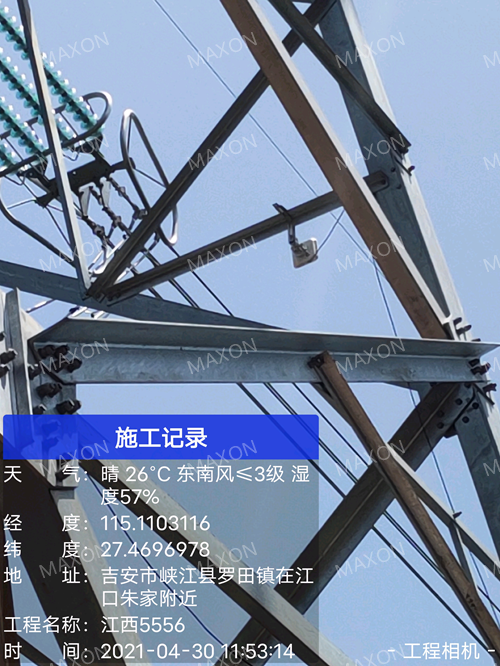
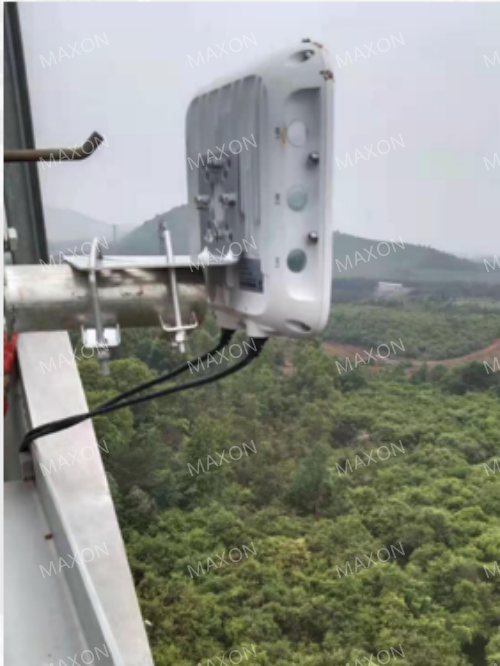
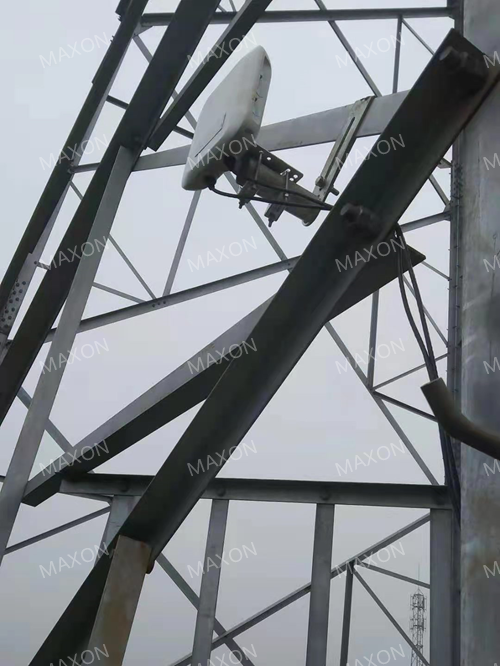
Maxon has specifically designed a power grid monitoring system architecture. Maxon industrial-grade switches and a monitoring cloud platform are deployed at the monitoring center, while front-end monitoring points and IP68-rated industrial-grade APs are installed at each power transmission tower to collect and upload on-site audio, video, and environmental data. The monitoring center centrally receives, monitors, stores, and manages the information, and can also remotely control the front-end equipment. The network link uses a closed-loop design; on the one hand, the STP protocol is used to prevent loops, and on the other hand, redundant access is achieved through fiber optic connections at both ends, ensuring that video signals can still be transmitted normally even if a single point is disconnected. The entire project utilizes long-distance transmission bridges (MX5011B series), industrial-grade switches (MX28MC-L series), all-network routers (MX4041R/MX5041R/MX5061R), and transmission line status monitoring devices to complete long-chain segmented networking and build a return channel for video surveillance images and sensor monitoring data, thereby achieving status monitoring of ultra-high voltage transmission lines.
The system uses a complementary power supply of solar energy and batteries. When there is sufficient sunlight, the batteries are charged; when there is no sunlight, the batteries provide continuous power, ensuring stable operation of the equipment.
This project starts from the C converter station in Sichuan Province, passing through five provinces: Sichuan, Yunnan, Guizhou, Hunan, and Jiangxi, with a transmission capacity of 8 million kilowatts. The entire project utilizes long-distance microwave transmission + transmission line status monitoring devices to complete long-chain segmented networking, building a return channel for video surveillance images and sensor monitoring data, and completing the status monitoring of ultra-high voltage transmission lines. The project route mainly traverses high mountains and steep ridges, with the highest elevation reaching 3500 meters. Mountainous terrain accounts for nearly 70% of the area, the geological structure is complex, the climate is highly variable, and material transportation and construction operations are challenging. Furthermore, stringent environmental protection requirements must be met. The project involves segmented long-chain networking, with a maximum of 11 hops in a single chain and a maximum distance exceeding 50 km.
http://mxcomm.cn/news/3952.html#sigProId115a2b1f8c