

Introduction
Giant storage tanks and intricate pipelines stand silently, carrying immense energy, but also harboring unforgiving risks: a slight leak of flammable gas, a subtle pipeline corrosion, an imperceptible temperature anomaly – any of these could trigger immeasurable consequences.
In the daily operation and maintenance of oil depots, traditional manual inspection methods face numerous technical bottlenecks: data collection relies on discrete manual records, making it difficult to form continuous, objective electronic archives; there is a lack of 24/7 uninterrupted sensing and early warning capabilities for potential hazards such as leaks, abnormal noises, and localized overheating; at the same time, inspection personnel themselves constitute a safety variable in the explosion-proof area, creating a contradiction in the management loop. Therefore, deploying a Maxon explosion-proof intelligent inspection robot system aims to reshape the inspection and maintenance paradigm through unmanned and digital means.
Project Overview
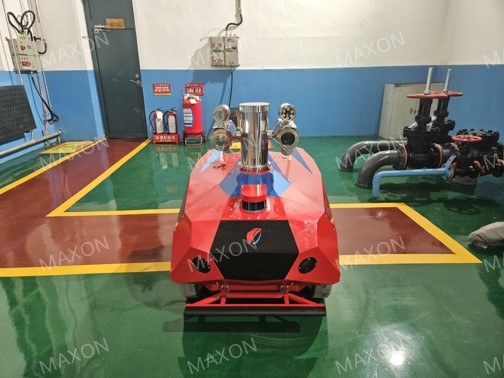
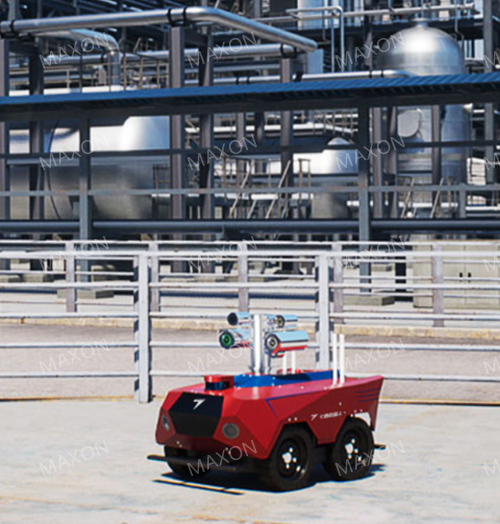
The core of this project is the introduction of intelligent maintenance robots to replace the original high-risk, low-efficiency manual inspection operations. The robot system needs to perform multiple key tasks in real time, including meter reading, equipment infrared temperature measurement, leak detection, and environmental gas monitoring, and stably transmit multiple high-definition video and sensor data back to the central control system, ultimately achieving normalized "unmanned autonomous inspection" operation, providing real-time, accurate data support for decision-making.
Project Challenges
The success of the project highly depends on a stable, high-speed data stream, but reality is full of challenges: dense metal pipelines severely degrade wireless signals, and the high-load data stream generated by robot inspection requires the network to have extreme performance in terms of bandwidth, latency, and anti-interference; most importantly, seamless roaming capability while moving is the core guarantee for the continuous operation of this data "lifeline," and any failure will directly translate into business risks, becoming a core bottleneck in achieving automation.
Solution and Advantages
Using Maxon explosion-proof wireless APs and bridges with explosion-proof rating of Exd IIB/IIC T6 and protection rating of IP68, combined with a wireless controller AC and industrial-grade switches, a network layer with no blind spots and continuous coverage is built. The equipment supports various installation methods such as pole mounting, wall mounting, ceiling mounting, and rail mounting, and can be flexibly adapted to various complex indoor and outdoor scenarios. The robot is equipped with a high-definition zoom camera, enabling it to automatically focus on and capture high-definition images of gauges, liquid level indicators, and other instrument panels from a safe distance, recognize readings, and upload them to the platform. Using image processing and analysis algorithms, it monitors equipment for leaks, accurately detects leak points, and uploads the information to the platform.
The robot is also equipped with an infrared thermal imager, which can capture thermal images of the tested equipment in real time. It supports setting absolute temperature thresholds or relative temperature differences (such as the temperature difference between three phases), and automatically triggers an alarm when the temperature rises abnormally.
The robot platform is equipped with gas sensors, acting as a "mobile monitoring point," covering a wider area and actively approaching valves and other leak-prone points for concentration detection, forming a dynamic concentration distribution map, which can quickly locate the approximate location of the leak source.
By building an extremely stable Maxon wireless communication network, combined with sensors and high-definition explosion-proof cameras, it fully supports functions such as instrument reading recognition, equipment infrared temperature measurement, leak detection, and environmental gas monitoring. While significantly improving the safety and production level of the oil depot, it also provides strong support for the continuous optimization of production efficiency.
Case Study
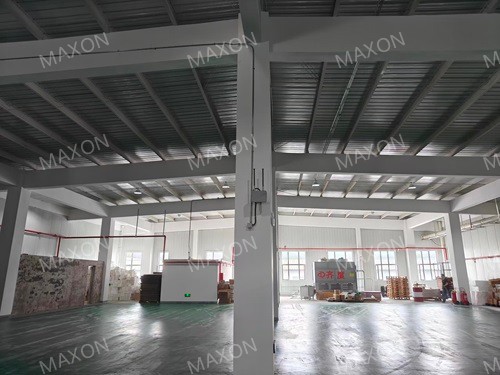
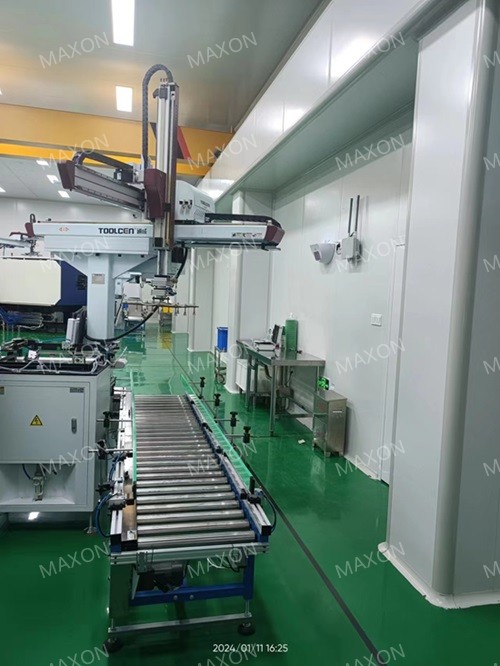
This project successfully replaced the traditional manual inspection mode by deploying a robotic inspection system, achieving comprehensive automated inspection of the oil depot and significantly improving the safety management and operational efficiency of the oil depot.

http://mxcomm.cn/news/3948.html#sigProId6a63212516