

River water quality monitoring is a crucial measure for protecting water resources, maintaining ecological balance, and promoting sustainable economic development.
Xinjiang is located deep inland, with an arid climate, making water resources vital.
Solution Overview
Maxon is committed to protecting aquatic ecosystems and has designed a dedicated wireless coverage monitoring solution. This solution deploys monitoring equipment at key river sections and pipeline network nodes (such as manholes, pumping stations, and overflow outlets) to collect real-time data on water quality, hydrology, and pipeline network operating status. It utilizes industrial-grade wireless APs and bridges with IP68 protection rating to build a dedicated wireless communication network with wide coverage, high bandwidth, low power consumption, and strong stability, ensuring reliable transmission of monitoring data to the monitoring center. The monitoring center can uniformly monitor, manage, and maintain all front-end and network equipment, providing real-time data support and scientific decision-making basis for water environment management, pipeline network scheduling, and emergency response.
Network Design
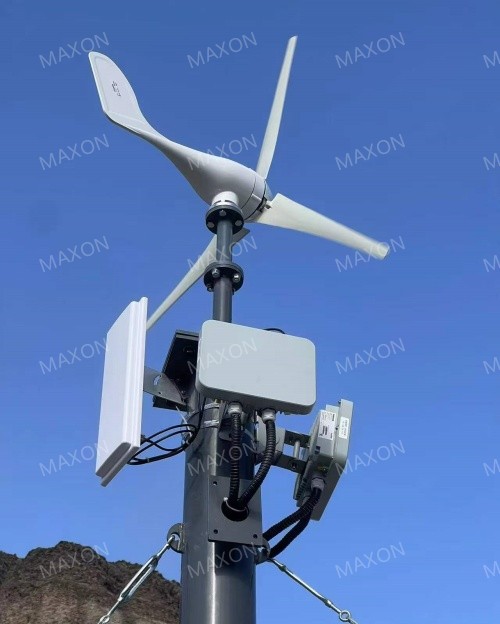
In vast river, lake, and reservoir areas, Maxon deploys multi-parameter water quality sensors and high-definition video cameras at key points such as river confluence points and upstream of drinking water sources. Using point-to-point (PtP) and point-to-multipoint (PtMP) transmission methods, industrial-grade wireless bridges with IP68 protection rating and long-distance transmission capabilities reliably upload collected data to the core switch of the monitoring center.
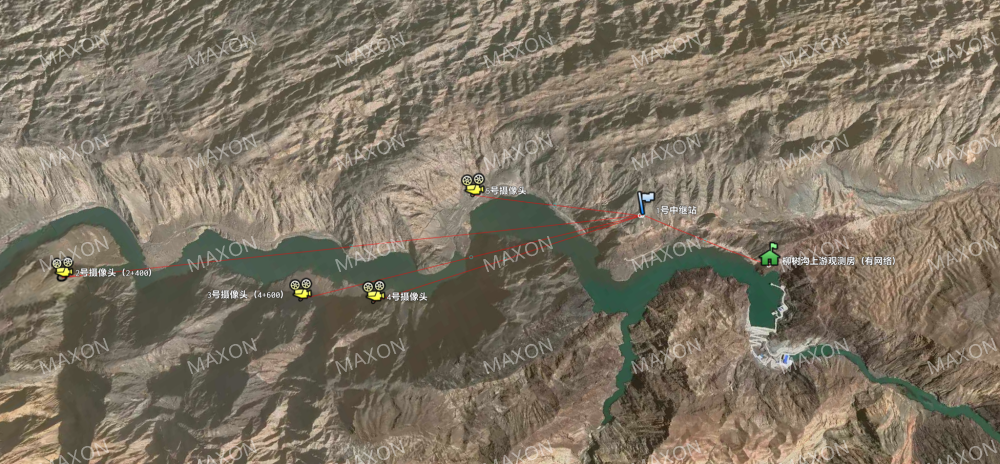
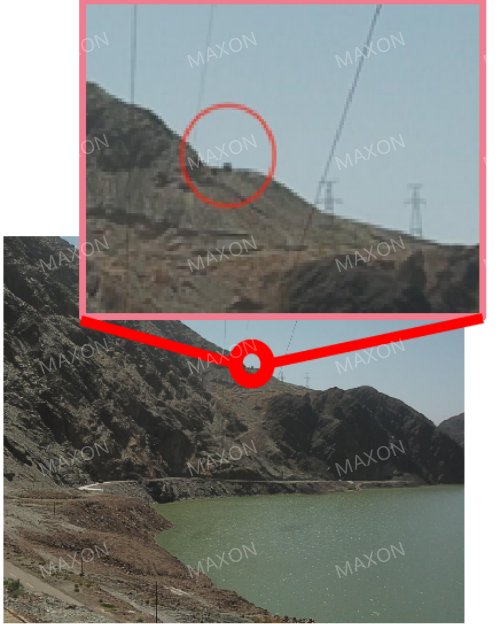
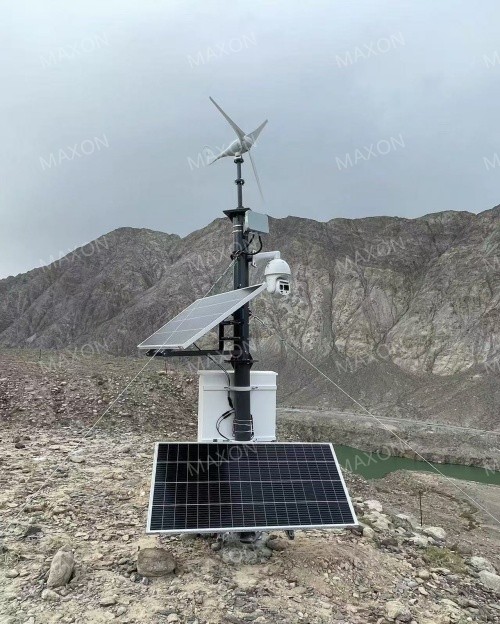
As shown in Figure 1, four monitoring points are distributed on both sides of the river valley. The relay base station is located at the original operator's base station location, which is a control point in the current area. The distance to the furthest monitoring point is approximately 5 kilometers, and the angle between the two outer points is 25°. The relay base station is approximately 1 km from the Liushugou observation station. The monitoring front-end uses a solar and wind power supply solution, and the point selection considers good sunlight conditions.
In addition, to improve the efficiency of daily inspections, Maxon has introduced mobile intelligent terminals that support real-time uploading of inspection data (including text, photos, and videos), electronic form filling, and location check-in functions, effectively avoiding manual data entry errors and achieving digital and efficient management of inspection work.
Equipment Selection
For river monitoring, the power supply system, protection rating, and wireless performance of the equipment are crucial. Maxon's industrial-grade equipment offers a transmission range of up to 100km and, combined with renewable energy and energy storage modules, is ideal for use in areas without network or power infrastructure. The equipment features a protection rating of at least IP68, a wide operating temperature range (-40~80℃), and supports WiFi 5/6 and 4G/5G wireless communication technologies, allowing for independent networking or integrated, complementary deployment, ensuring flexible and rapid deployment.
http://mxcomm.cn/news/3949.html#sigProId541f8342cc