


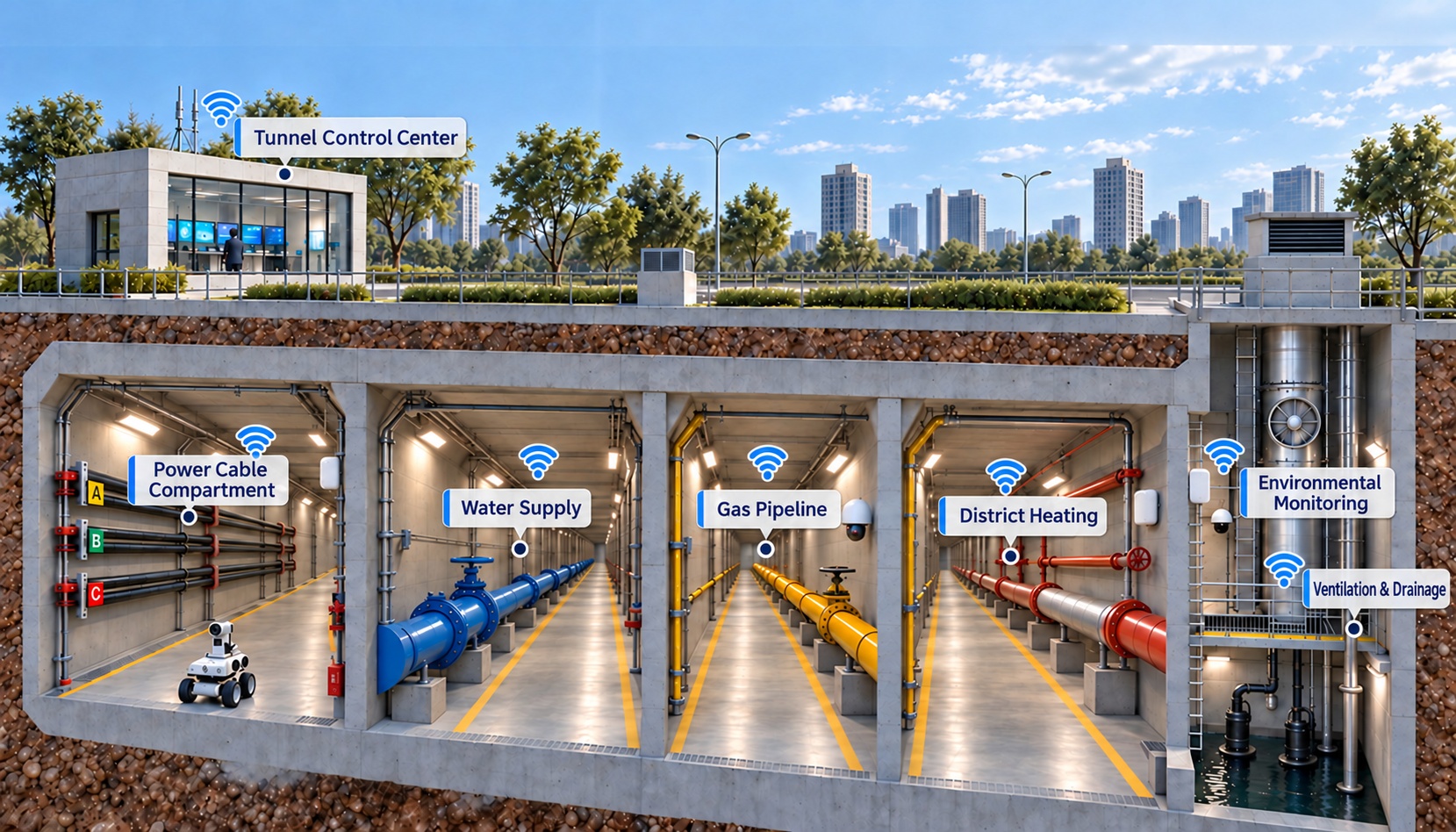
The integration of industrial-grade wireless access points and WiFi bridges has become a cornerstone in the digital transformation of underground pipeline corridors. These critical urban infrastructures, which house gas, power, and communication lines, present unique environmental challenges including high humidity, confined spaces, and the potential presence of hazardous gases. To ensure the safety and efficiency of these corridors, a robust communication backbone is required. Industrial wireless solutions provide the high reliability, signal penetration, and specialized environmental protection necessary to support real-time monitoring, automated control, and remote maintenance, transforming these subterranean tunnels into intelligent, manageable assets.
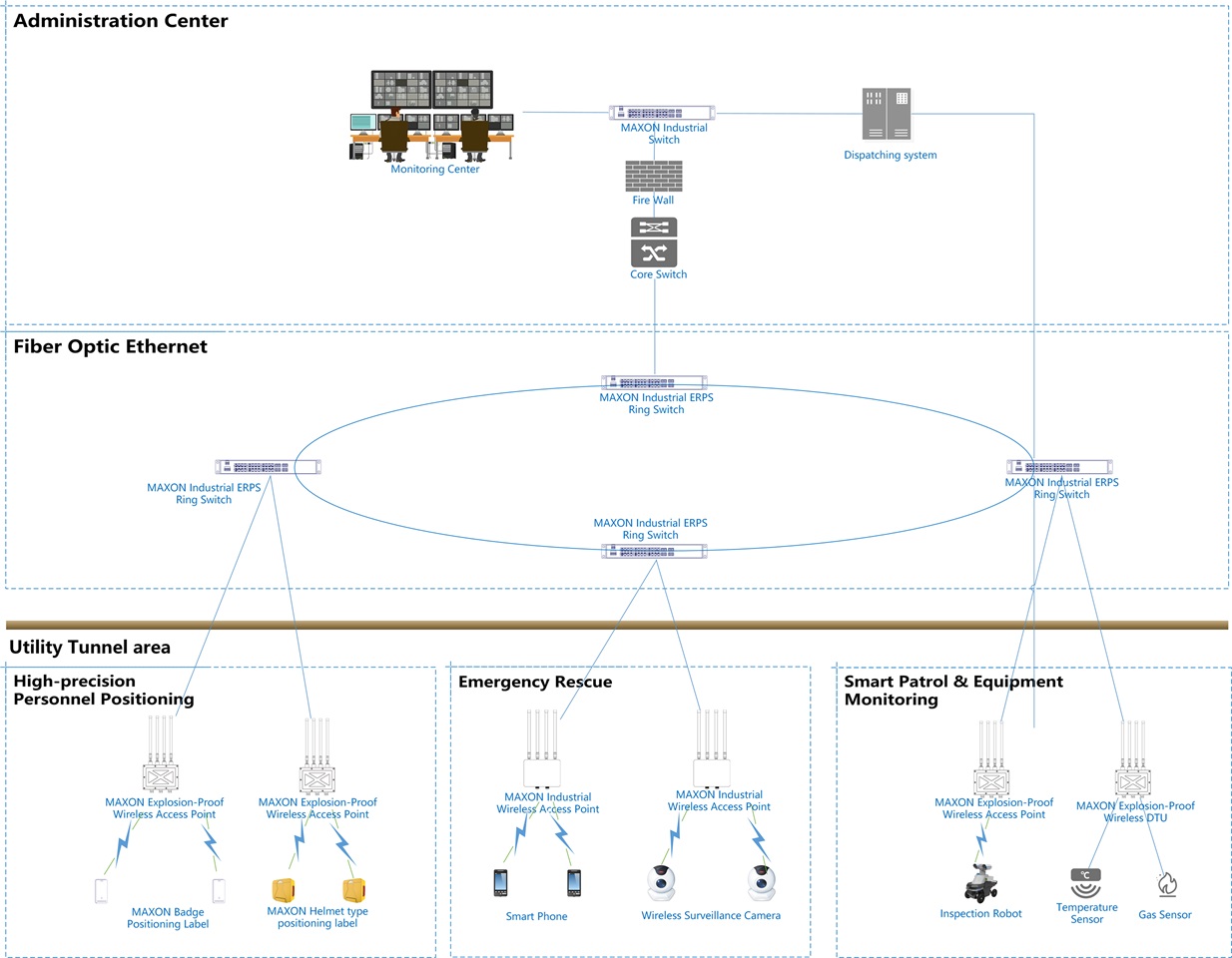
In hazardous environments such as gas pipeline corridors, safety is the primary concern, requiring communication hardware that adheres to strict explosion-proof standards. Deploying intrinsically safe or flameproof access points with ATEX or IECEx certifications prevents the equipment from becoming an ignition source in potentially explosive atmospheres. These wireless networks facilitate the use of explosion-proof PDAs and high-definition cameras, allowing inspectors to relay real-time data and live video feeds to centralized monitoring centers. This connectivity is vital for the immediate detection of gas leaks and the remote operation of automated valves, enabling a rapid response to anomalies that could otherwise lead to catastrophic incidents.
Connectivity Across Pipeline Corridor Types
Gas pipeline corridors may connect field monitoring devices with centralized monitoring locations. The wireless network provides a path for device data; it does not itself detect gas or operate valves. Equipment used in hazardous areas must be selected for the specific area and verified against the applicable product documentation.
In power corridors, wireless access can support communication between inspection robots, their cameras and sensors, and a control center. In communications corridors, industrial wireless access points can connect handheld terminals used for asset-management tasks and environmental sensors that report conditions such as temperature and humidity.
Inspection and Field Data Return
During cable-guided robot inspection, cameras and sensors carried by a robot generate information for review at a control center. Wireless links can carry that video and other data from corridor equipment toward monitoring locations. Handheld PDAs can use corridor wireless access to reach asset-management applications while personnel work in the field.
These are connectivity roles within a larger system. The monitoring platform, sensor measurements, robot functions and valve-control logic remain part of their respective devices and applications.
Advantages and features of the solution

Superior protective design
IP68 protection and corrosion resistance design effectively resists forest dust and moisture, ensuring stable operation of equipment in harsh environments and reducing maintenance costs.

Superior wireless performance
With its superior wireless performance and external antenna, it can output a strong signal, achieving wide coverage and reliable data bridging.

Strong real-time data acquisition capability
It provides a low-latency, highly reliable communication link, enabling second-level transmission of hydrological data and providing real-time information support for critical decision-making such as flood control and drought relief.

Super strong anti-interference
With its excellent electromagnetic compatibility and signal processing technology, it can effectively suppress multipath interference such as water surface reflection, ensuring high reliability and continuity of data transmission.
Solution Topology Diagram
Recommended product models and list
FAQ
What does the wireless network do in a pipeline corridor?
It provides network access and data transport between connected field equipment and monitoring locations. The connected sensors, cameras, robots and control applications perform their own measurement or operational functions.
Can corridor wireless connectivity support inspection video?
The page describes cameras carried by inspection equipment and wireless links that return video and other data to a control center. Actual suitability depends on the selected equipment and project configuration.
Does the network itself detect gas leaks or control valves?
No. Wireless connectivity can carry data from external monitoring devices or support communication with a wider control system, but it does not itself detect gas or operate valves.
Which MAXON models should be used?
The listed models provide options for industrial wireless access, hazardous-area wireless equipment and positioning. Confirm the selected model, its product documentation and its fit for the corridor layout before specifying equipment.

